
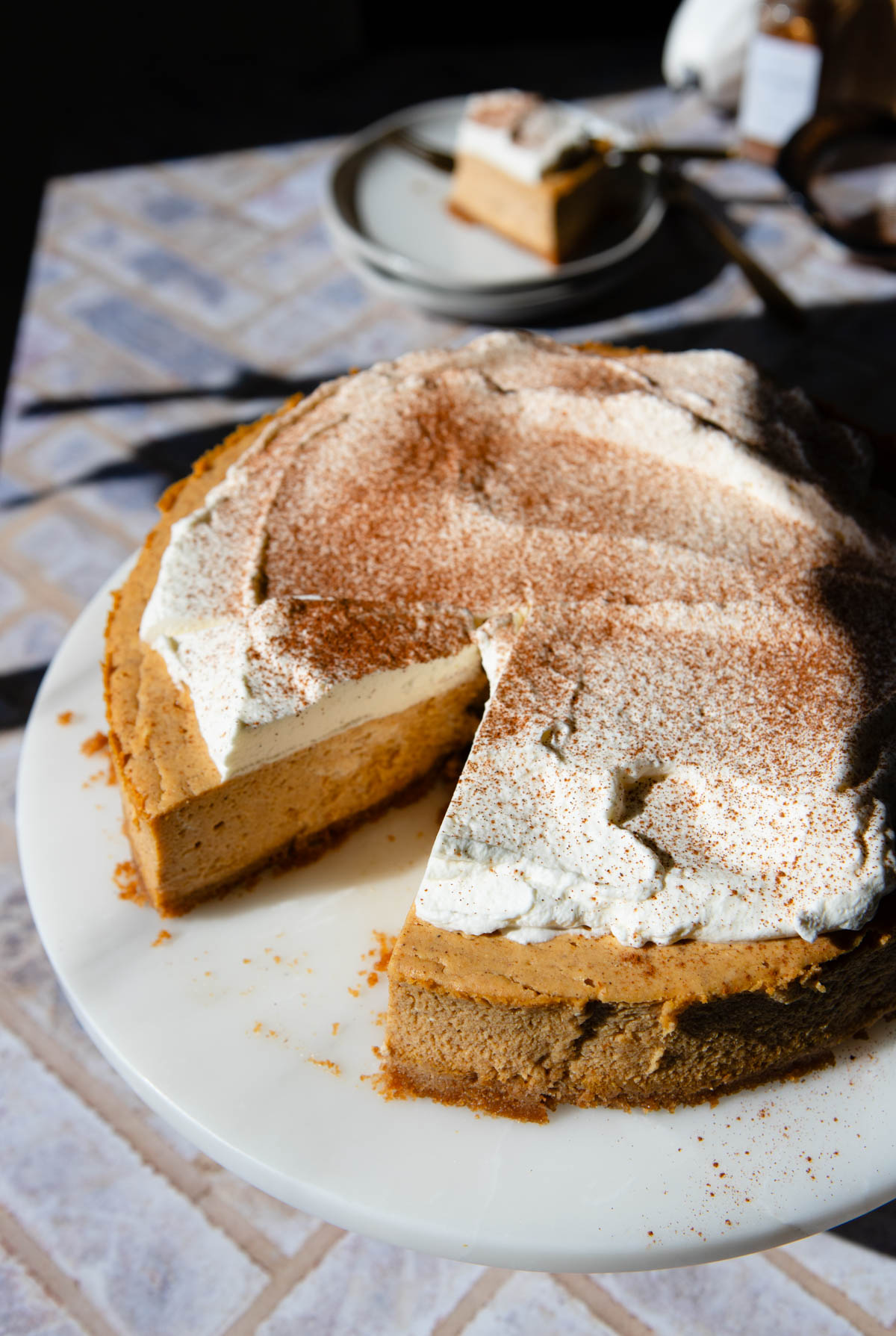
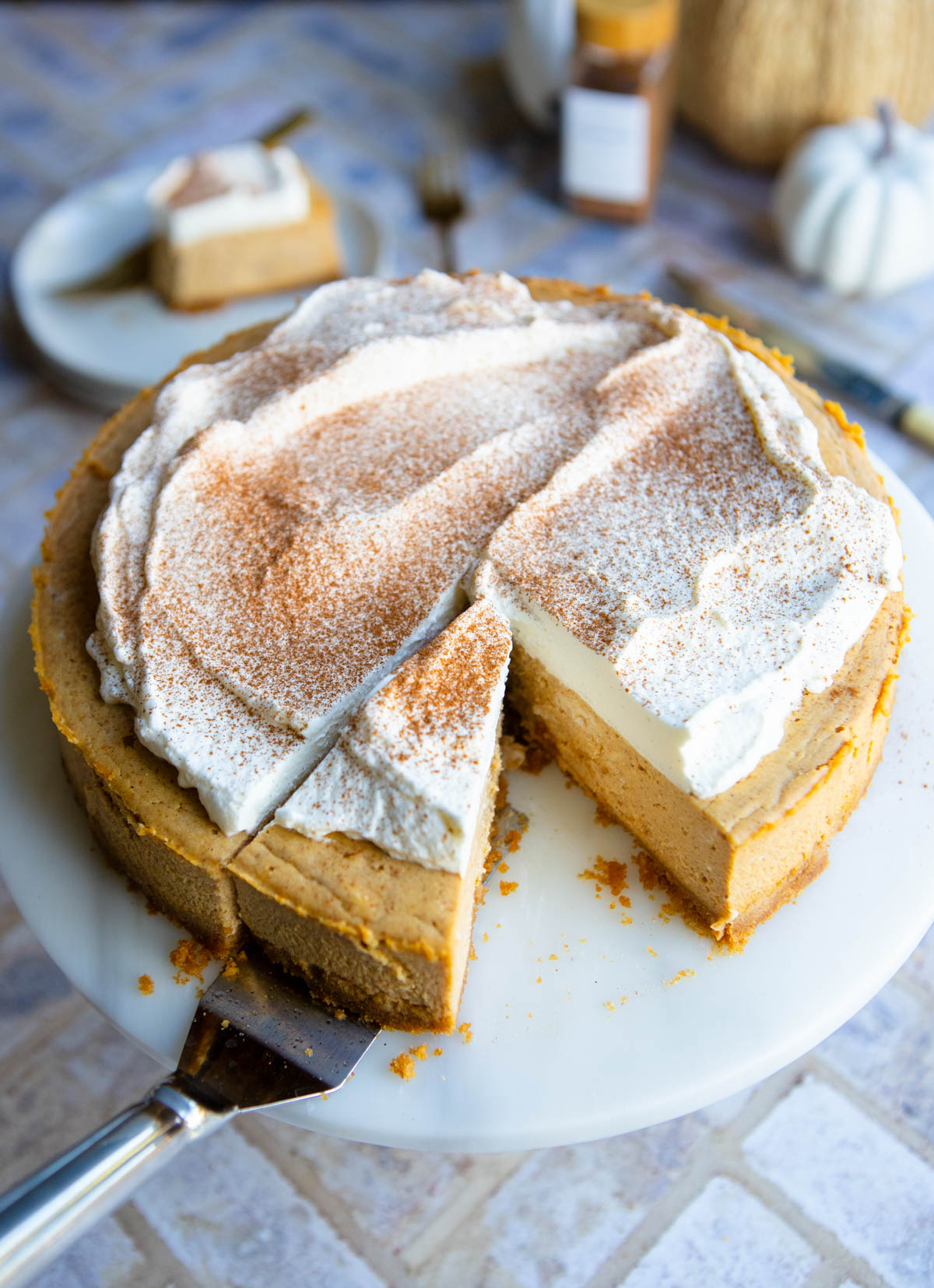
This recipe for pumpkin cheesecake produces a creamy filling that no one will be able to guess is made with a blend of cottage cheese and low-fat cream cheese. It defies the misconceptions about “healthier” desserts. Incredible pumpkin spice flavor, a beautiful sliceable texture and classic graham cracker crust. It’s a make-ahead dessert you can prepare in advance and have one less thing to do the day of your event.
When I recreate classic recipes that are more nutrition focused, especially desserts, my aim is for them not to taste like diet food! No bland, boring, strange sugar alternative flavoring or weird textures! I not only won’t eat it, I definitely won’t publish it here.
I also don’t want to over-promise on nutrition results. This cheesecake therefore, is not meant to contribute a large part of protein to your diet. These are just bonus protein points. And I love making recipes that are lower in calories and saturated fat.
So when developing a cottage cheese cheesecake filling that could be varied, the focus had to be on not tasting the tang of cottage cheese, avoiding a chalky texture, and definitely achieving firm, sliceable pieces that don’t fall apart.
Well, I’ve perfected the recipe and I absolutely promise you’ll love this pumpkin pie cottage cheese cheesecake. It will pass even the most picky of taste testers. I am so happy and proud of this one, and can’t wait for you to try it!
Jump to:
Why you’ll love this pumpkin pie cheesecake
- Perfect creamy filling with zero graininess, that tastes like classic cheesecake.
- A significant improvement in nutrition profile, with 35% fewer calories, 60% less saturated fat and 45% more protein than traditional cheesecake. And I promise, with no detectable difference in taste or texture!
- Pleasantly firm, sliceable texture that does not fall apart when slicing. If you’ve tried making a cottage cheese cheesecake before, you may have come across this very common problem.
- Great balance of sweetness and pumpkin pie spice flavor. You will be able to taste the pumpkin without it being overwhelming, and zero tang or tartness from the cottage cheese, just the right level of sweet.
Ingredients
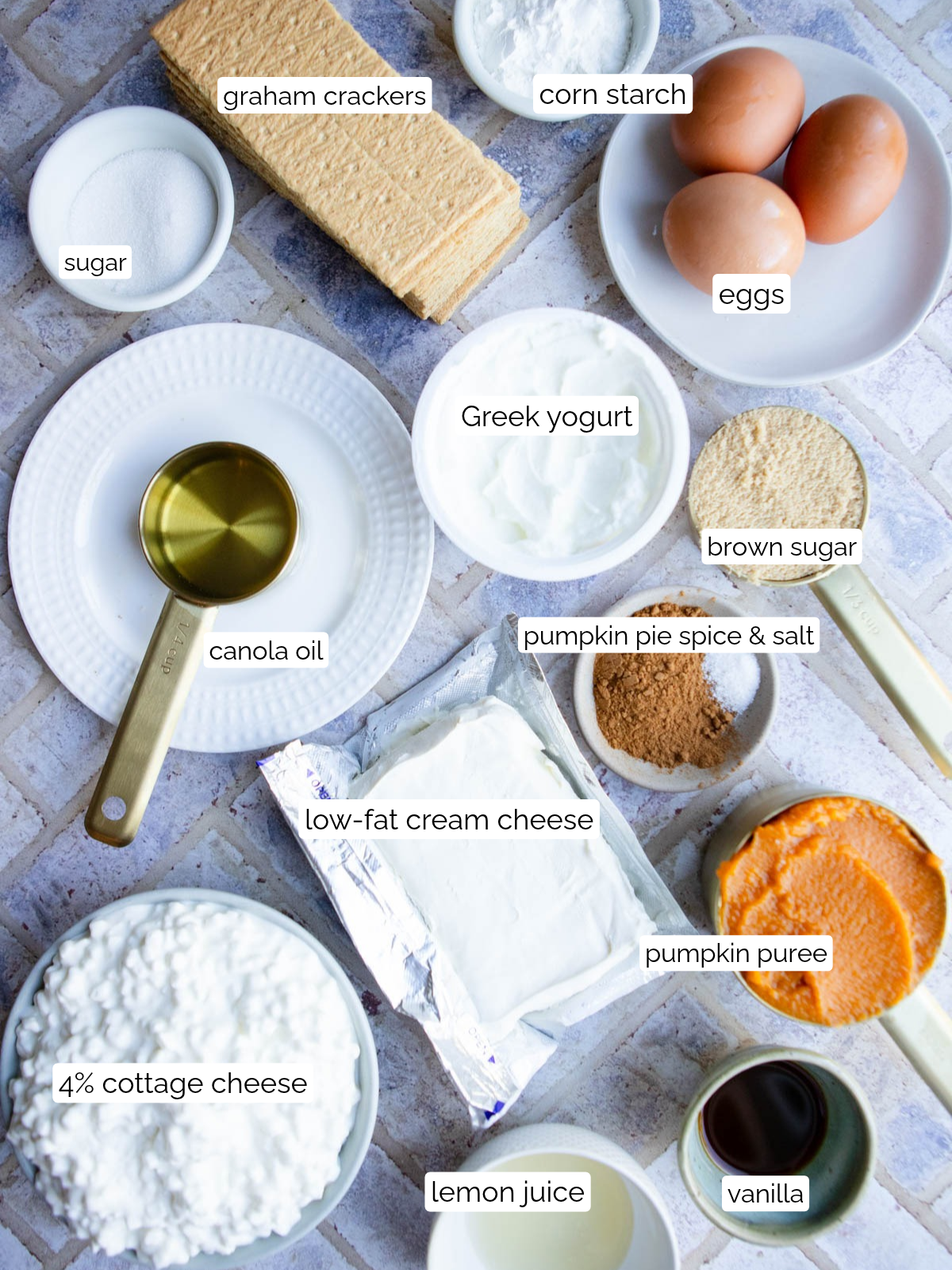
CRUST INGREDIENTS
- 1 ½ cups graham cracker crumbs
- 4 – 5 tablespoons canola oil
- 2 tablespoons granulated sugar
FILLING INGREDIENTS
- 18 ounces (2 ¼ cups) 4% small curd cottage cheese. Both Daisy and Good Culture are the brands I recommend using. I tested Trader Joe’s and store brands, but they were too watery.
- 6 ounces low-fat cream cheese or Neufchâtel cheese, softened. In America these are essentially the same thing, some brands just label them differently. Store brands like Vons call it Neufchatel whereas Philadelphia labels it low-fat. Make sure it is softened or else it won’t blend in well.
- ¾ cup nonfat plain Greek yogurt (6 ounces)
- 1 cup canned pumpkin puree (not pumpkin pie filling). Libby’s or Whole Foods are my brands of choice, as both are drier and don’t have a ton of excess water as some other brands.
- ⅔ cup packed light brown sugar
- 3 tablespoons cornstarch, this is important and helps to firm up the cheesecake, do not skip!
- 1 tablespoon pumpkin pie spice
- 1 tablespoon vanilla extract
- 1 ½ teaspoons lemon juice
- ¼ teaspoon salt
- 3 large eggs, room temperature
Step-by-step directions
Pan and Oven prep
Preheat the oven to 300°F (150°C) with one rack in the center and another rack right below it. Then prep your pan by lightly spraying the inside of the9-inch (23 cm) springform pan with cooking spray, then set the pan on a baking sheet.
Cut a round piece of parchment and insert it into the bottom of the springform pan for added release assurance. Start heating about 3 cups of water so it’s hot when the cheesecake goes in.
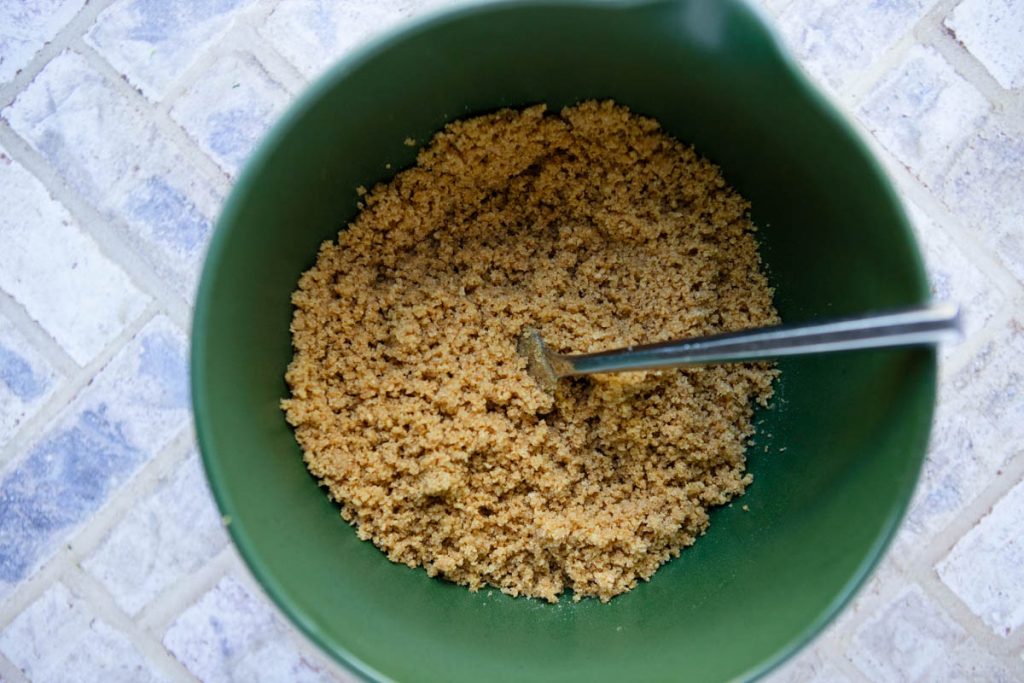
Make the Crust
Make graham cracker crumbs by adding them to the bowl of the food processor and pulsing till smooth. Transfer the graham cracker crumbs to a bowl along with the canola oil and granulated sugar and stir with a fork until the crumbs look like damp sand.
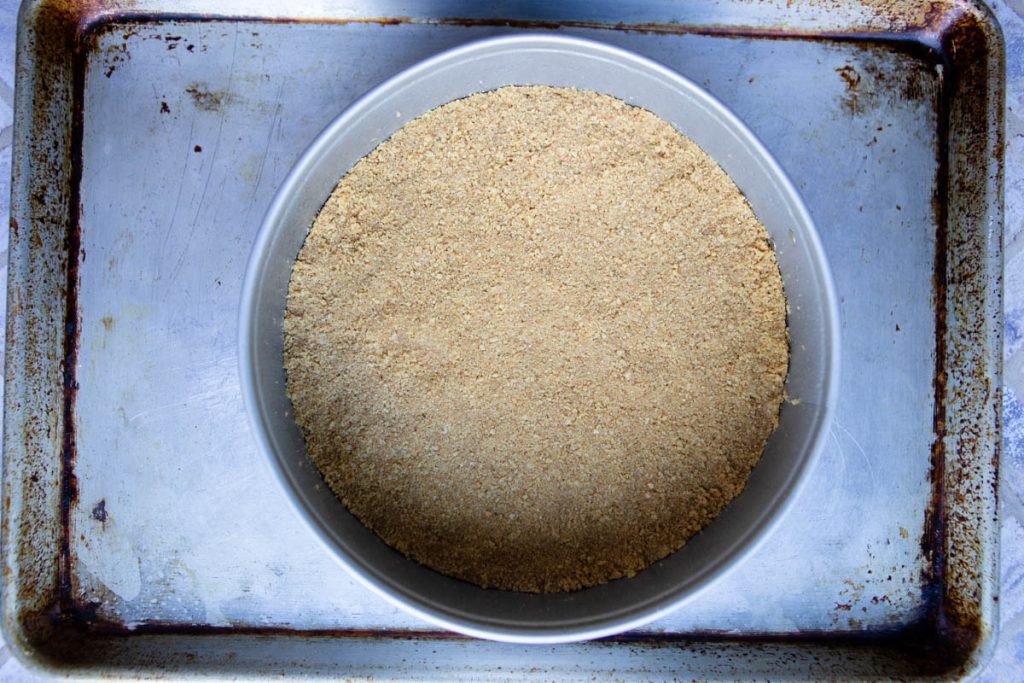
Bake crust
Pour crust mixture into the pan and press firmly across the bottom and slightly up the sides using the bottom of a measuring cup. Bake 10-12 minutes, until the crust smells toasty and looks dry on top. Set aside while you make the filling, leaving the oven on.
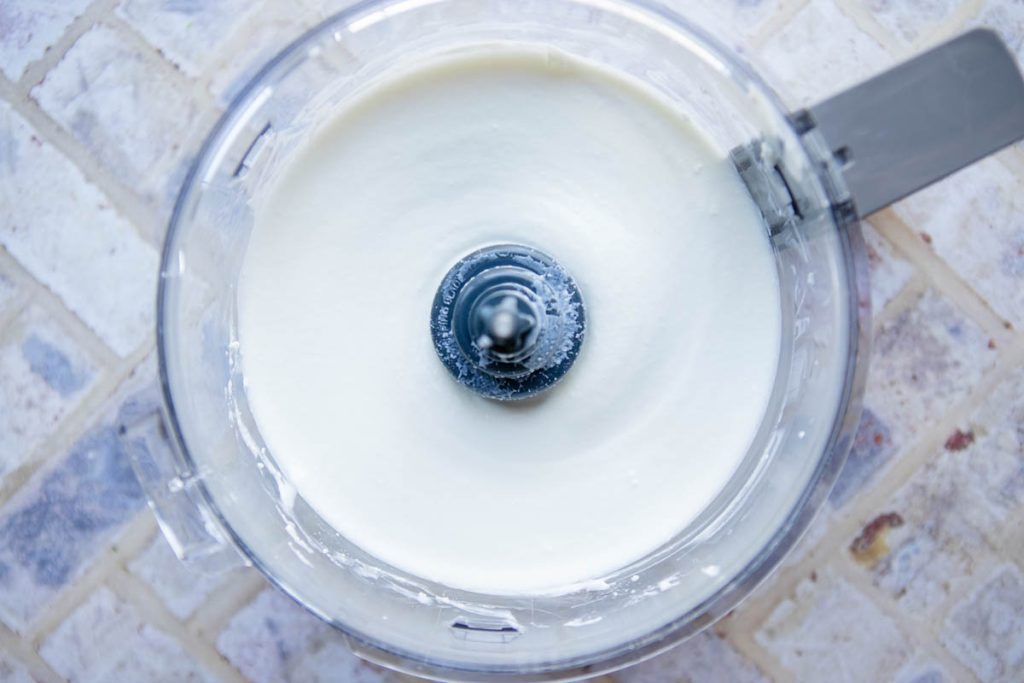
Blend the cottage cheese
Add the cottage cheese to a food processor and blend 2 minutes, stopping to scrape down the sides about halfway, until completely smooth with no visible curds. Make sure cottage cheese is completely smooth, as this keeps the filling creamy!
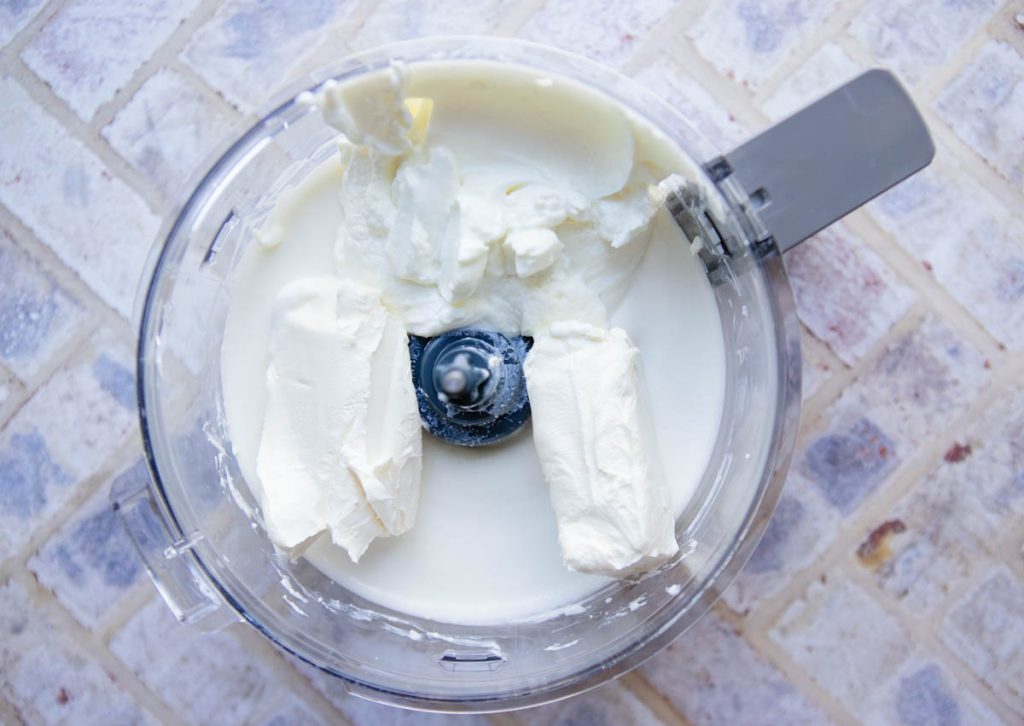
Blend in cream cheese and Yogurt
Add the Neufchâtel and Greek yogurt and blend about 1 minute, until creamy.
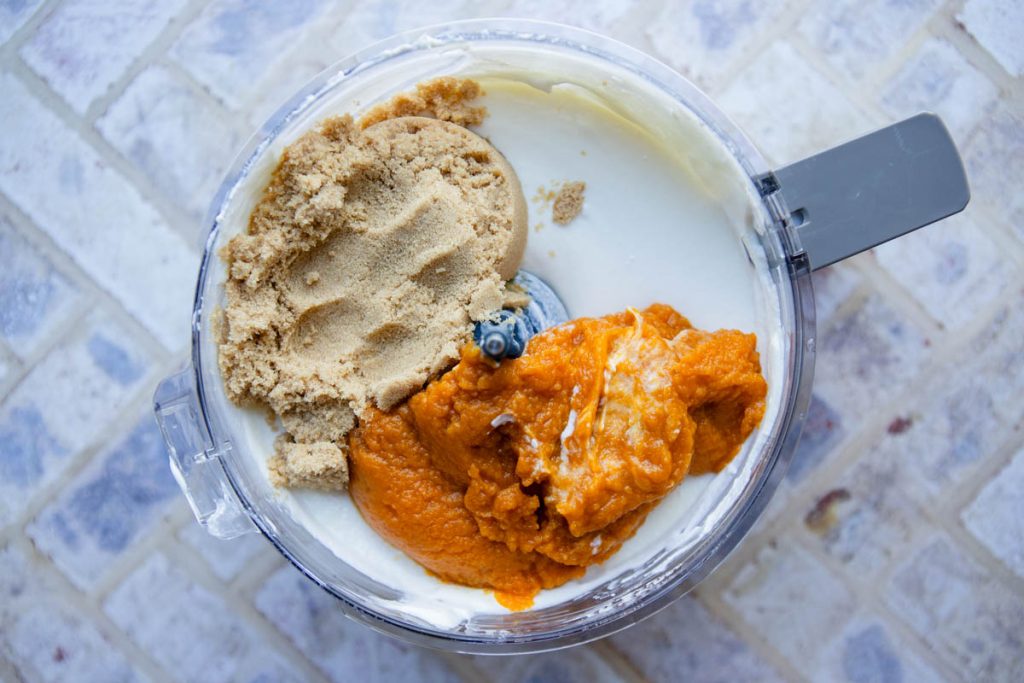
Add remaining ingredients except eggs!
Add the pumpkin puree, brown sugar, cornstarch, pumpkin pie spice, vanilla, lemon juice and salt. Blend about 30 seconds, until no streaks of pumpkin remain.
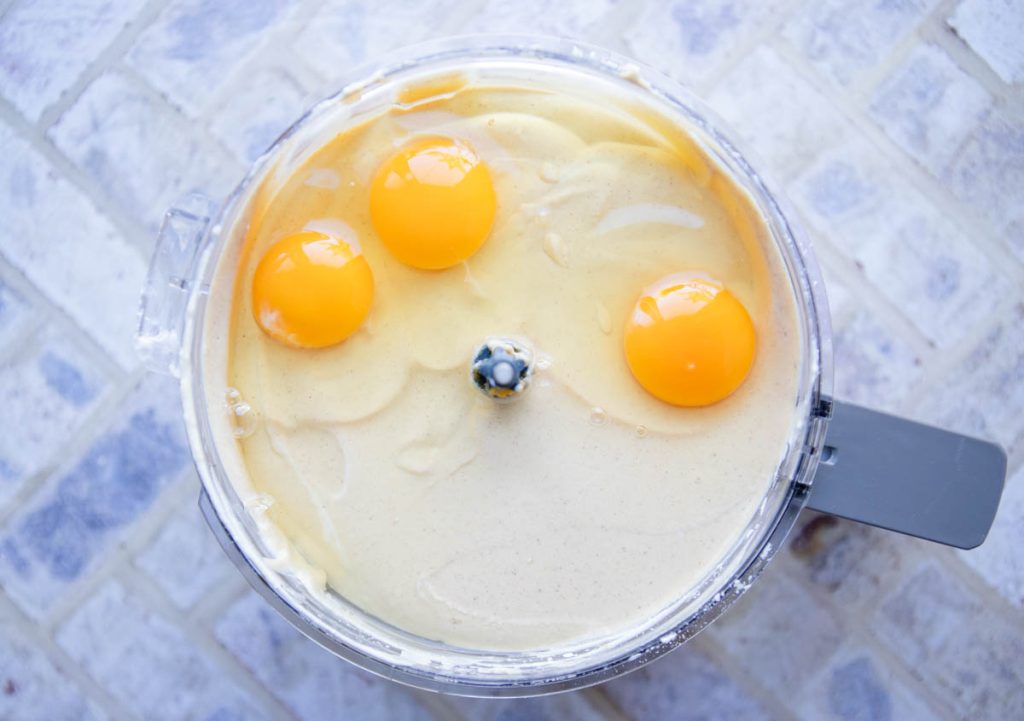
Add the eggs
Add the eggs and pulse 5 to 8 times, just until blended. Stop as soon as you don’t see any streaks of egg. You do not want to overmix the filling, as excess air can leave small holes or bubbles in the finished filling instead of a smooth, creamy texture, and can also lead to the top cracking.
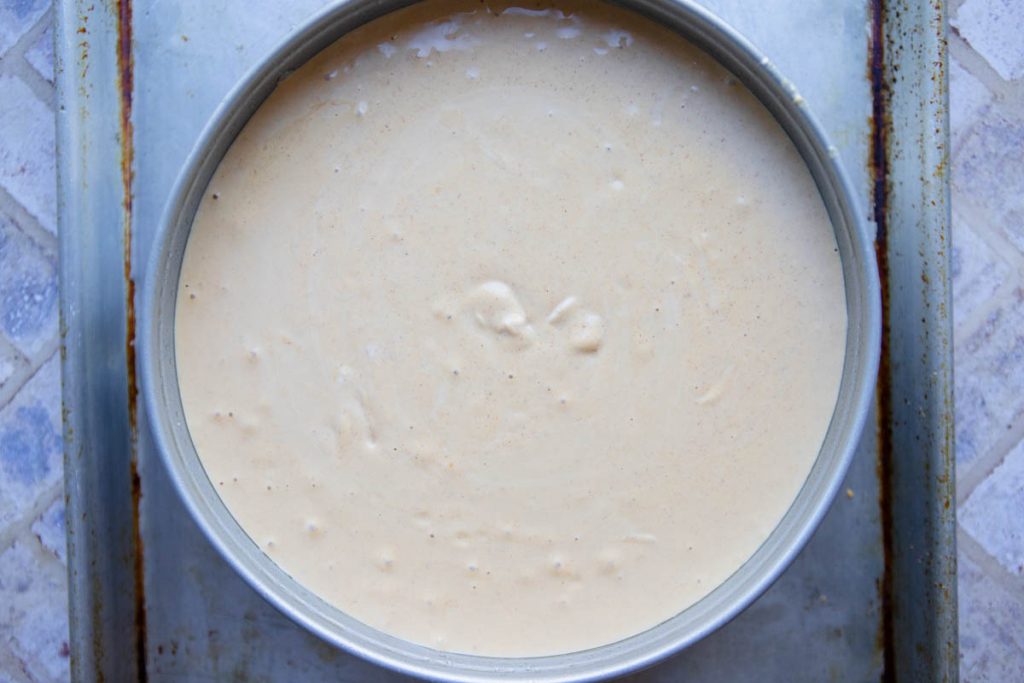
Bake Cheesecake
Pour the filling over the crust and tap the pan gently on the counter 3 to 4 times to pop any air bubbles. Place the pan on the center rack. Pour the hot water into a metal baking dish and set it on the lower rack.
Baking Times
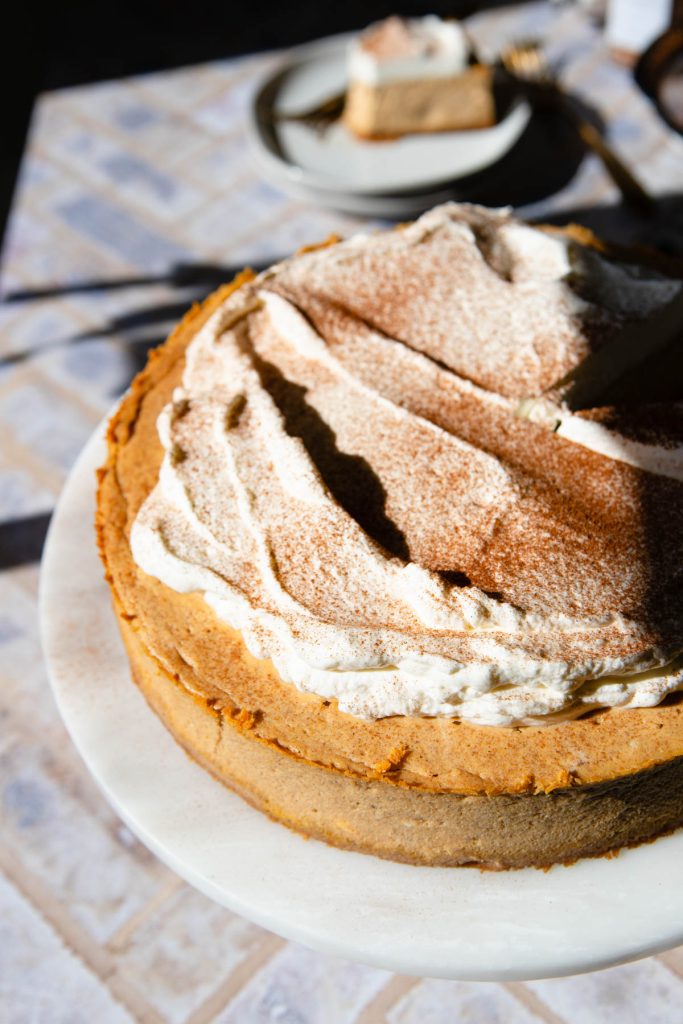
Bake times can vary depending on the size of your oven, but for a standard full-size gas oven, baking time should range between 90-100 minutes. For a small countertop convection oven, baking time can be as little as 50-60 minutes. After about 80 minutes (or 40 minutes if using a small oven), peek at the water pan and add more hot water if it’s running low. The cheesecake is done when the edges look set and the 3″ in the center still jiggles slightly like gelatin. Slide an instant-read thermometer into the center. It should read 150°F (65°C). Don’t bake past 155°F (68°C) or the texture gets dry.
Remove the pan from the oven and cool on a wire rack for 1 hour. Run a thin knife around the edge to loosen the crust, then cover loosely and refrigerate at least 8 hours or overnight.
When ready to plate and serve, release the springform ring and slice with a sharp knife, wiping the blade clean between slices.
Important Recipe Troubleshooting tips
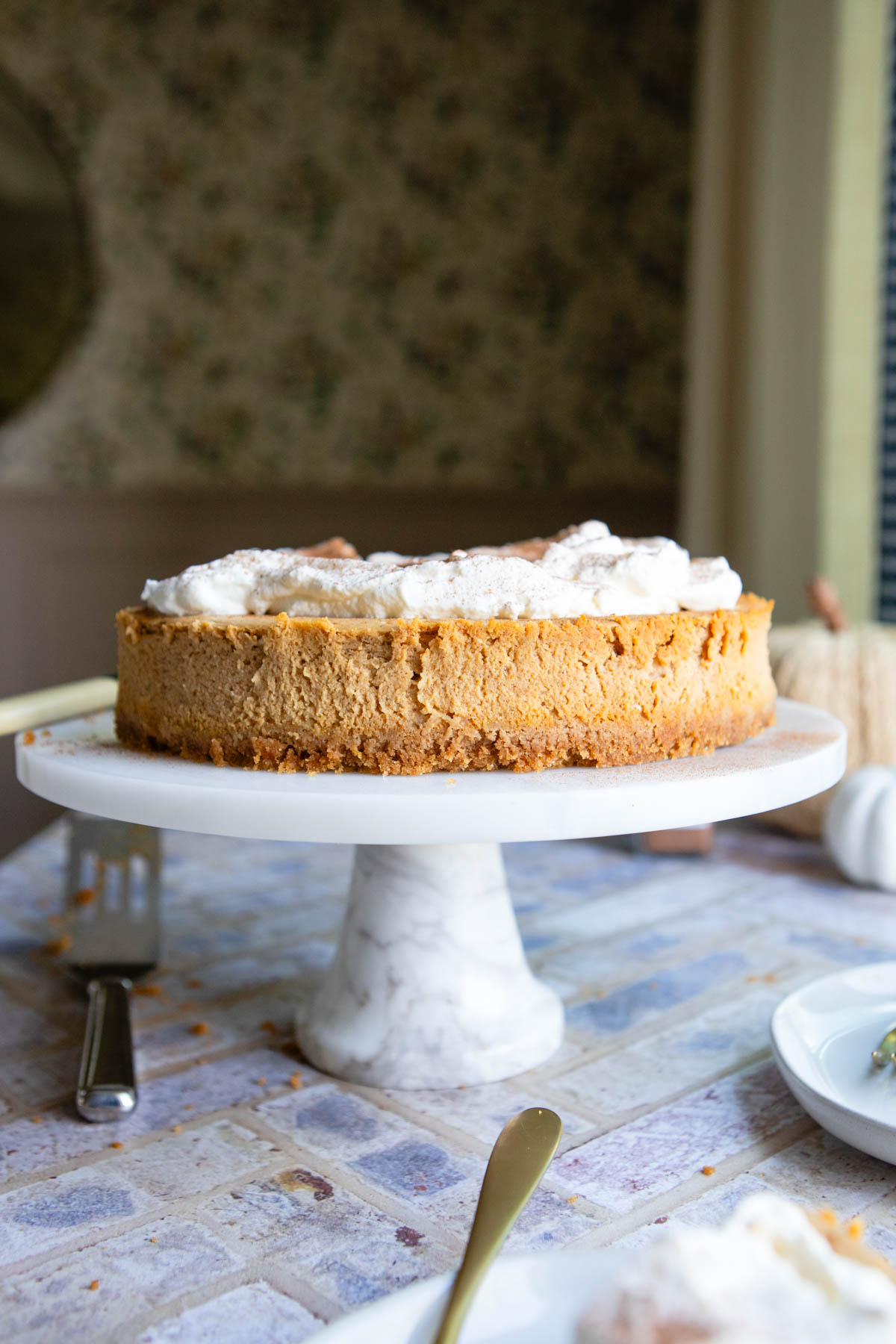
- Blend the cottage cheese before adding the eggs. Blend until completely smooth, stopping to scrape down the sides so no curds remain. Once you add the eggs, pulse just until combined; mixing too much at this stage can incorporate extra air and contribute to puffing and cracking.
- Look for set edges and a gentle jiggle. The cheesecake is ready to come out when the edges look set and the center wobbles slightly like gelatin rather than moving like liquid. It will continue to firm as it cools, so resist baking until the center is completely still.
- Give it an overnight chill. Refrigerate the cooled cheesecake for at least 8 hours before slicing. The chill gives the filling time to firm up, making it easier to cut and serve.
Preventing a Cracked Cheesecake & what to do if it happens
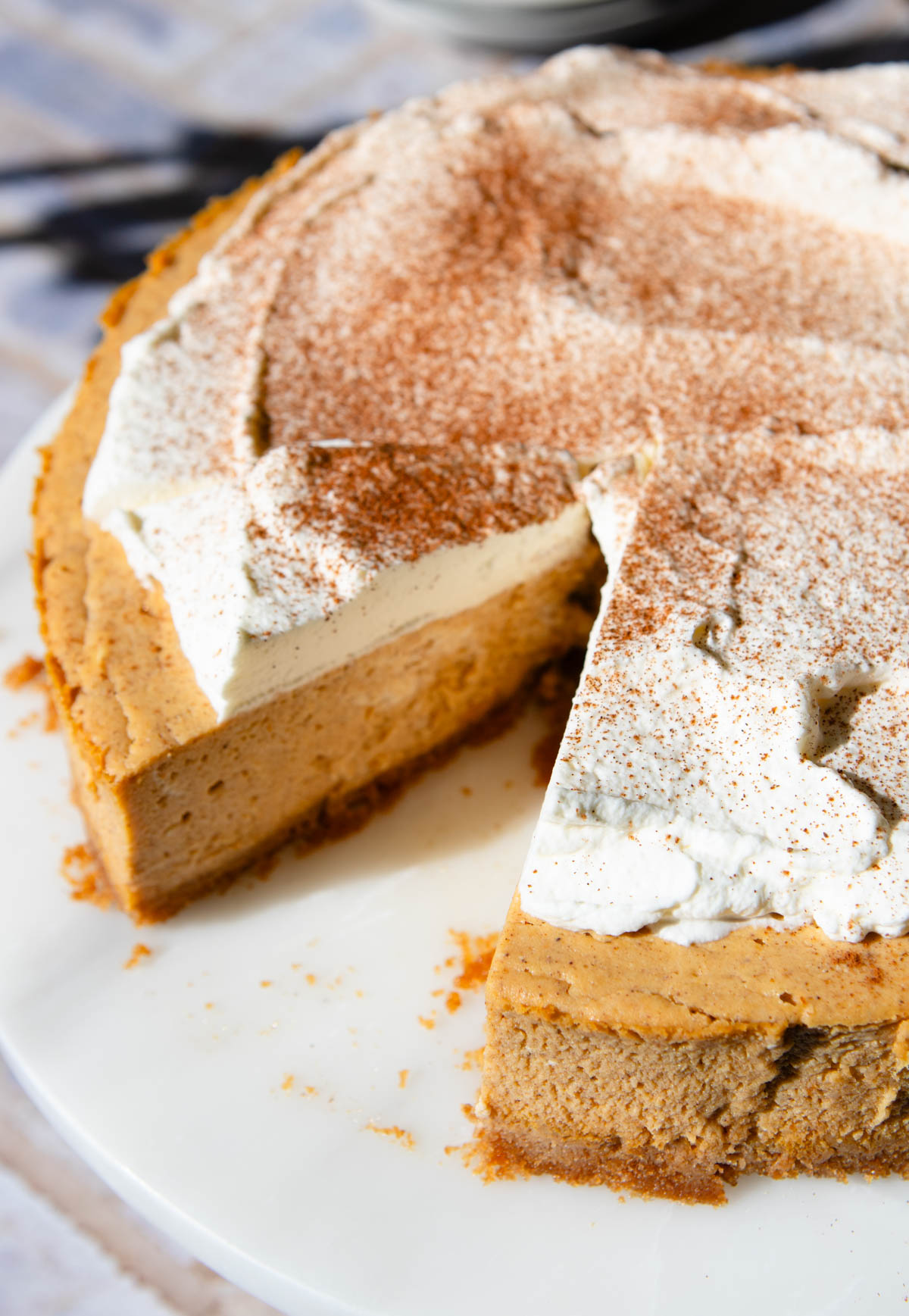
I’ve now made almost a dozen variations of this cheesecake and I can tell you that despite my best efforts, cracks can still occur! The important thing to remember is that cracks in the end, don’t really matter. The cheesecake still tastes exactly the same (unless you woefully overbaked it), and everyone will still love it. But here’s a few tips to help prevent excessive cracking.
- Don’t skip the separate pan of hot water. The water pan adds humidity to the oven, which will help prevent cracks. It won’t necessarily guarantee a crack-free cheesecake though.
- Don’t wait for the center to become completely firm. Start checking at the earliest time confirmed by your testing. The edges should look set, while the center still has a slight gelatin-like jiggle. Overbaking is the primary cause of excessive cracking
- Cool it gradually and loosen the edge. As cheesecake cools, it contracts; if it sticks to the pan, that tension can contribute to cracking.
- If a crack starts forming in the oven, check for doneness. A crack near the edge can be a sign that the cheesecake is getting too much heat or is close to overbaked. Check the center rather than automatically continuing for the full listed time. Use that instant read thermometer for your best test of doneness.
- If it cracks, let it finish cooling and chilling. A crack doesn’t mean the cheesecake is ruined. Once it’s fully chilled, cover the top with whipped cream and a sprinkle of pumpkin pie spice as I’ve done in these photos.
Cheesecake FAQ’s
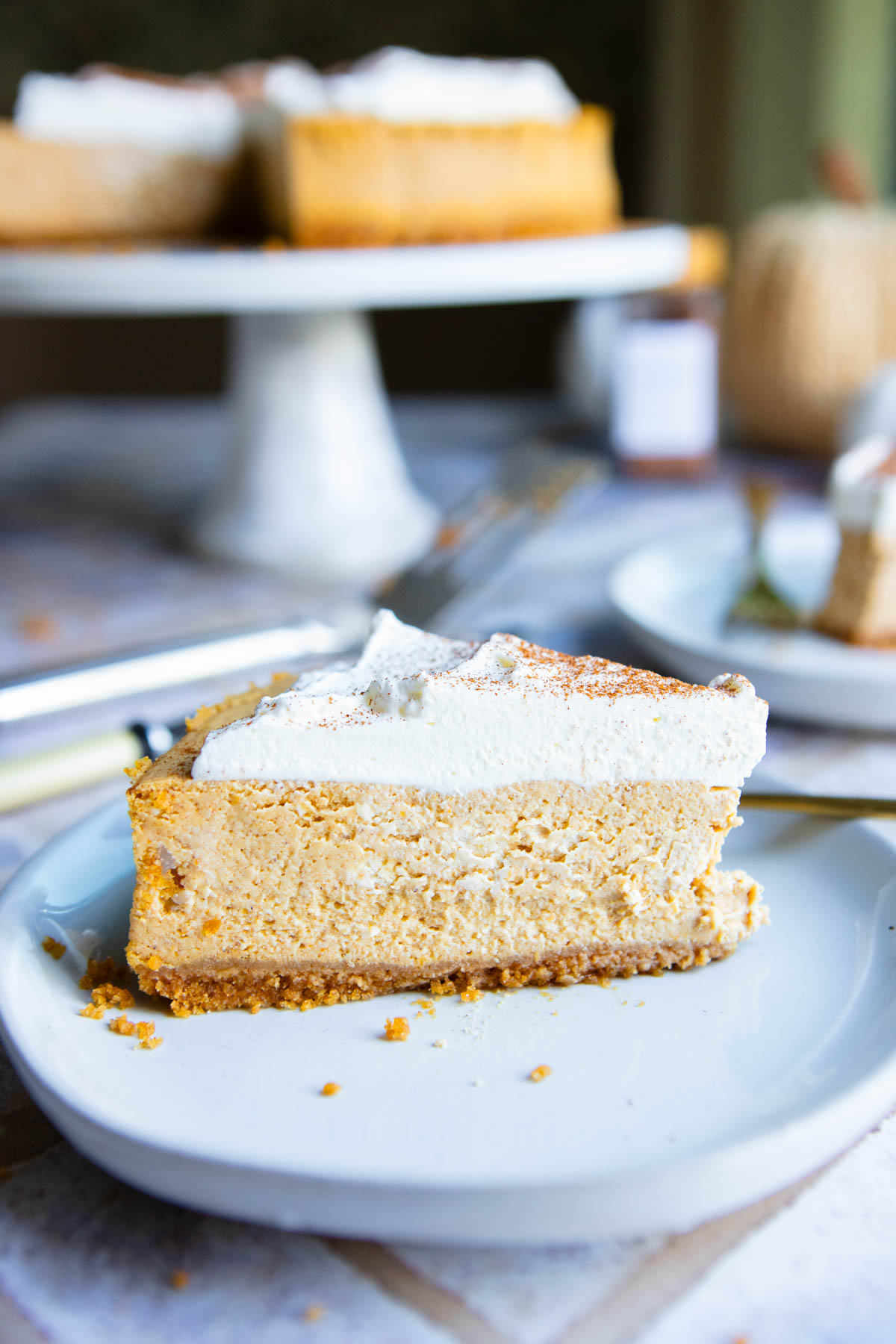
I can assure you through multiple taste tests of neighbors, friends and family members that you cannot taste cottage cheese in this cheesecake. The blending till completely smooth step helps to contribute to a smooth, creamy and mild flavor cheesecake.
This cheesecake has a smooth, creamy filling with enough body to feel like cheesecake. It’s softer than a very dense cheesecake, but it isn’t light and fluffy. To me, it is the perfect cheesecake texture, as I strongly dislike dense cheesecakes.
You don’t need to place the springform pan directly in water. Instead, this recipe uses a separate pan of hot water on the rack below the cheesecake to add moisture to the oven. It’s a simpler setup, though it can’t guarantee the cheesecake won’t crack.

⭐⭐⭐⭐⭐
Did you make this recipe?
If you gave this recipe a try, I’d love your feedback! Any tips or recipe additions you’d like to share, I’d love to hear it! Let’s connect down in the comments below.
More dessert recipes
- Citrus Olive Oil Cake
- Rustic Plum Tart
- Peach Puff Pastry Tarts
- Fruit Galette with Olive Oil Crust
- Olive Oil Chocolate Chip Cookies
Equipment
- 1 Baking sheet
Ingredients
CRUST INGREDIENTS
- 1 ½ cups graham cracker crumbs
- 4 tablespoons canola oil
- 2 tablespoons granulated sugar
FILLING INGREDIENTS
- 18 ounces 4% small curd cottage cheese Daisy or Good Culture brands
- 6 ounces low-fat cream cheese softened
- ¾ cup nonfat plain Greek yogurt
- 1 cup canned pumpkin puree not pumpkin pie filling
- ⅔ cup light brown sugar packed
- 3 tablespoons cornstarch
- 1 tablespoon pumpkin pie spice
- 1 tablespoon vanilla extract
- 1 ½ teaspoons lemon juice
- ¼ teaspoon salt
- 3 large eggs room temperature
Instructions
- Preheat oven to 300°F (150°C) with one rack in the center and another rack right below it. Lightly spray the inside of a 9-inch (23 cm) springform pan with cooking spray and set it on a baking sheet. Cut a round piece of parchment and insert it into the bottom of the springform pan for added release assurance. Start heating about 3 cups of water so it’s hot when the cheesecake goes in.
- Stir the graham cracker crumbs, canola oil and granulated sugar together in a bowl with a fork until the crumbs look like damp sand. Pour into the pan and press firmly across the bottom and about 1 inch up the sides using the bottom of a measuring cup. Bake 10-12 minutes, until the crust smells toasty and looks dry on top. Set aside while you make the filling. Leave the oven on.1 ½ cups graham cracker crumbs, 4 tablespoons canola oil, 2 tablespoons granulated sugar
- While the crust is baking, prep the filling. Add the cottage cheese to a food processor and blend 2 minutes, stopping to scrape down the sides about halfway, until completely smooth with no visible curds. If your food processor begins to heat up, take more frequent pauses. Add the Neufchâtel and Greek yogurt and blend about 1 minute, until creamy.18 ounces 4% small curd cottage cheese , 6 ounces low-fat cream cheese, ¾ cup nonfat plain Greek yogurt
- Add the pumpkin puree, brown sugar, cornstarch, pumpkin pie spice, vanilla, lemon juice and salt. Blend about 30 seconds, until no streaks of pumpkin remain. Add the eggs and pulse 5 to 8 times, just until blended. Stop as soon as you don’t see any streaks of egg. If your processor bowl is small, blend in two batches and whisk them together in a large bowl.1 cup canned pumpkin puree, ⅔ cup light brown sugar, 3 tablespoons cornstarch, 1 tablespoon pumpkin pie spice, 1 tablespoon vanilla extract, 1 ½ teaspoons lemon juice, ¼ teaspoon salt, 3 large eggs
- Pour the filling over the crust and tap the pan gently on the counter 3 to 4 times to pop any air bubbles. Place the pan on the center rack. Pour the hot water into a metal baking dish and set it on the lower rack.
- Bake 90-100 minutes, checking beginning at 80 minutes. After about 60 minutes, peek at the water pan and add more hot water if it’s running low. The cheesecake is done when the edges look set and the 3 inches in the center still jiggles slightly like gelatin. Slide an instant-read thermometer into the center. It should read 150°F (65°C). Don’t bake past 155°F (68°C) or the texture gets dry.
- Remove the pan from the oven and cool on a wire rack for 1 hour. Run a thin knife around the edge to loosen the crust, then cover loosely and refrigerate at least 8 hours or overnight.
- Release the springform ring and slice with a sharp knife, wiping the blade clean between slices.
Leave a Comment