



This easy chicken cacciatore features all the recipe ingredients you would expect from the classic dish, but comes together in under 1 hour. We use boneless skinless chicken thighs to maintain flavor but keep it lighter and mess-free. And since it’s a one pan meal packed with peppers, mushrooms and other veggies, it’s a nutritious dish that makes for easy clean up!

When developing this recipe, we kept most of the elements you love about chicken cacciatore. But we had to make it easy to replicate in your kitchen, any night of the week. This means simple techniques, a reasonable cook time and easy clean up.
Our version still braises low and slow in a rich hunter-style tomato sauce loaded with bell peppers, mushrooms, and garlic. This makes it true one-pan weeknight meal that hits the table in under an hour yet tastes like it simmered all afternoon. Serve it over whole wheat pasta, brown rice, or a scoop of polenta for a satisfying dinner the whole family will ask for on repeat.
Jump to:
- Why You’ll Love this Recipe for Chicken Cacciatore
- What is Chicken Cacciatore?
- Ingredients Needed
- How to Make This Classic Dish
- Important Recipe Notes & tips
- Recipe Substitutions for Chicken Cacciatore
- Serving Suggestions
- Freezing, Thawing and Reheating Instructions
- Making Slow Crock Pot Chicken Cacciatore
- More Easy One Pot Meals
- Easy 1 Hour Chicken Cacciatore Recipe
Why You’ll Love this Recipe for Chicken Cacciatore
- Elevated, healthy conscious comfort food. Even though this dish feels hearty and decadent, it’s still packed with protein, essential vitamins and minerals and calorie conscious.
- Simple prep, then fix it and forget it. Besides chopping up vegetables and searing the chicken, once the recipe is in the pan, you simply let it do its thing.
- Ready in just under 1 hour. While many traditional chicken cacciatore recipes use bone-in chicken thighs that call for a longer braising time, this utilizes boneless skinless thigs for quicker cook time but still plenty of flavor.
What is Chicken Cacciatore?
A chicken dish made by braising chicken in a tomato sauce with onions, bell peppers, mushrooms, garlic, herbs, and often a splash of wine. The word cacciatore means “hunter” in Italian, and while some versions vary by region, such as the addition of olives or capers, the main theme of the dish is its rustic, stew like nature. Traditionally it’s made with bone-in chicken, but this version uses boneless, skinless chicken thighs for a quicker, weeknight-friendly meal.
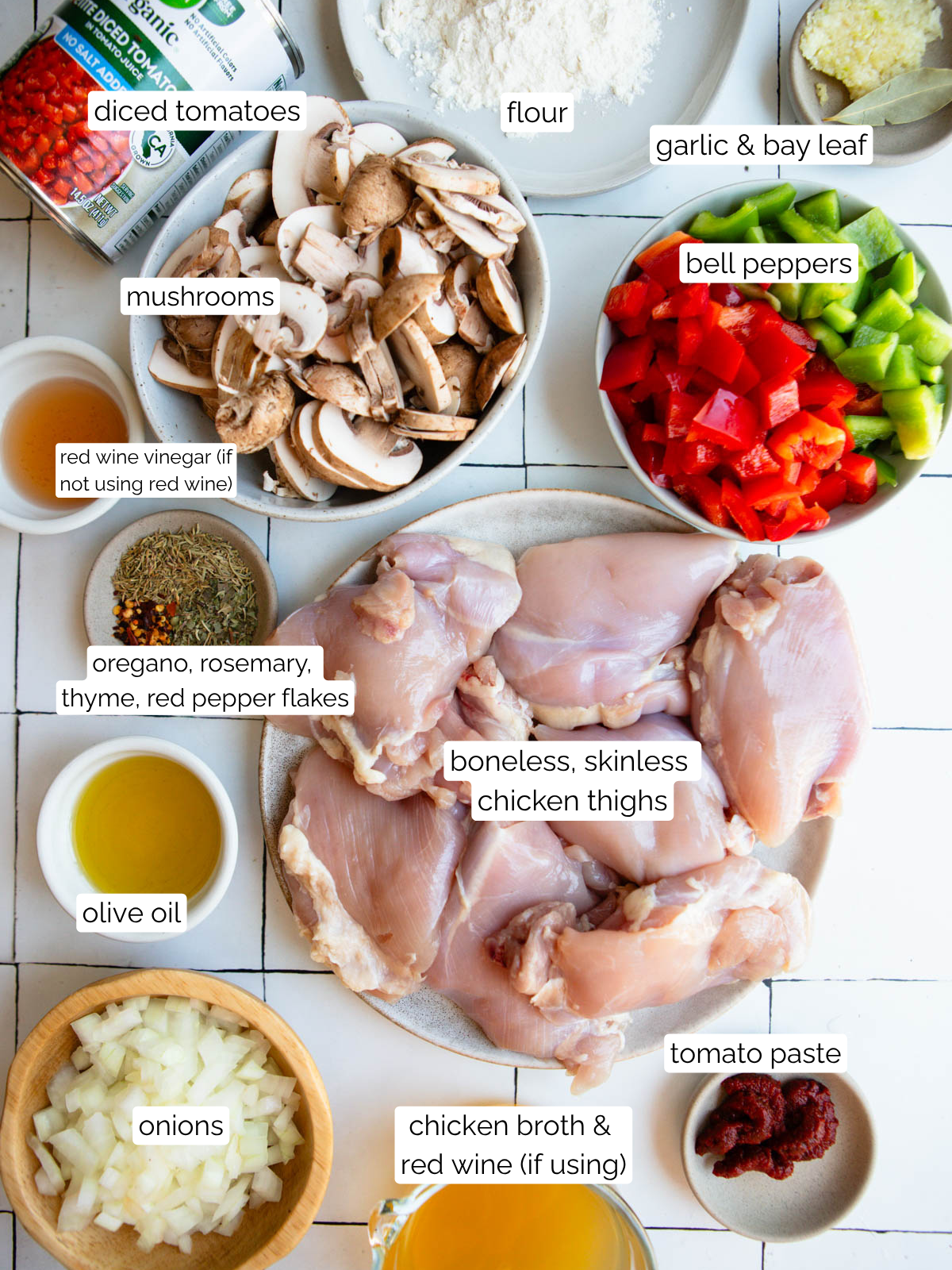
Ingredients Needed
- 2 pounds boneless, skinless chicken thighs (about 6 to 8 thighs), with visible fat removed. You may use skin-on, bone-in but we prefer the skinless option for lower fat and quicker cook time.
- ½ teaspoon fine sea salt, plus more to taste
- ¼ teaspoon freshly cracked black pepper, plus more to taste
- 3 tablespoons all-purpose flour, used for dredging the chicken. May substitute for a gluten free flour of choice.
- 2 tablespoons olive oil, divided
- 1 medium yellow onion, diced
- 1 medium red bell pepper, diced
- 1 medium green bell pepper, diced
- 8 ounces cremini mushrooms, sliced (one 8-ounce package). Cremini are often called baby bella mushrooms, depending on where you shop.
- 5 cloves garlic, minced
- 2 tablespoons tomato paste, make sure you read the recipe directions for adding this ingredient. The special “bloom” technique helps intensify the flavor.
- ½ cup dry red wine, such as Cabernet Sauvignon. However if you don’t wish to use red wine, we offer a nonalcoholic option in the recipe notes.
- 1 can (28 ounces) diced tomatoes, undrained
- ½ cup low-sodium chicken broth
- 1 teaspoon dried oregano
- ½ teaspoon dried rosemary
- ½ teaspoon dried thyme
- 1 bay leaf
- ¼ teaspoon red pepper flakes (optional, for a little kick)
How to Make This Classic Dish
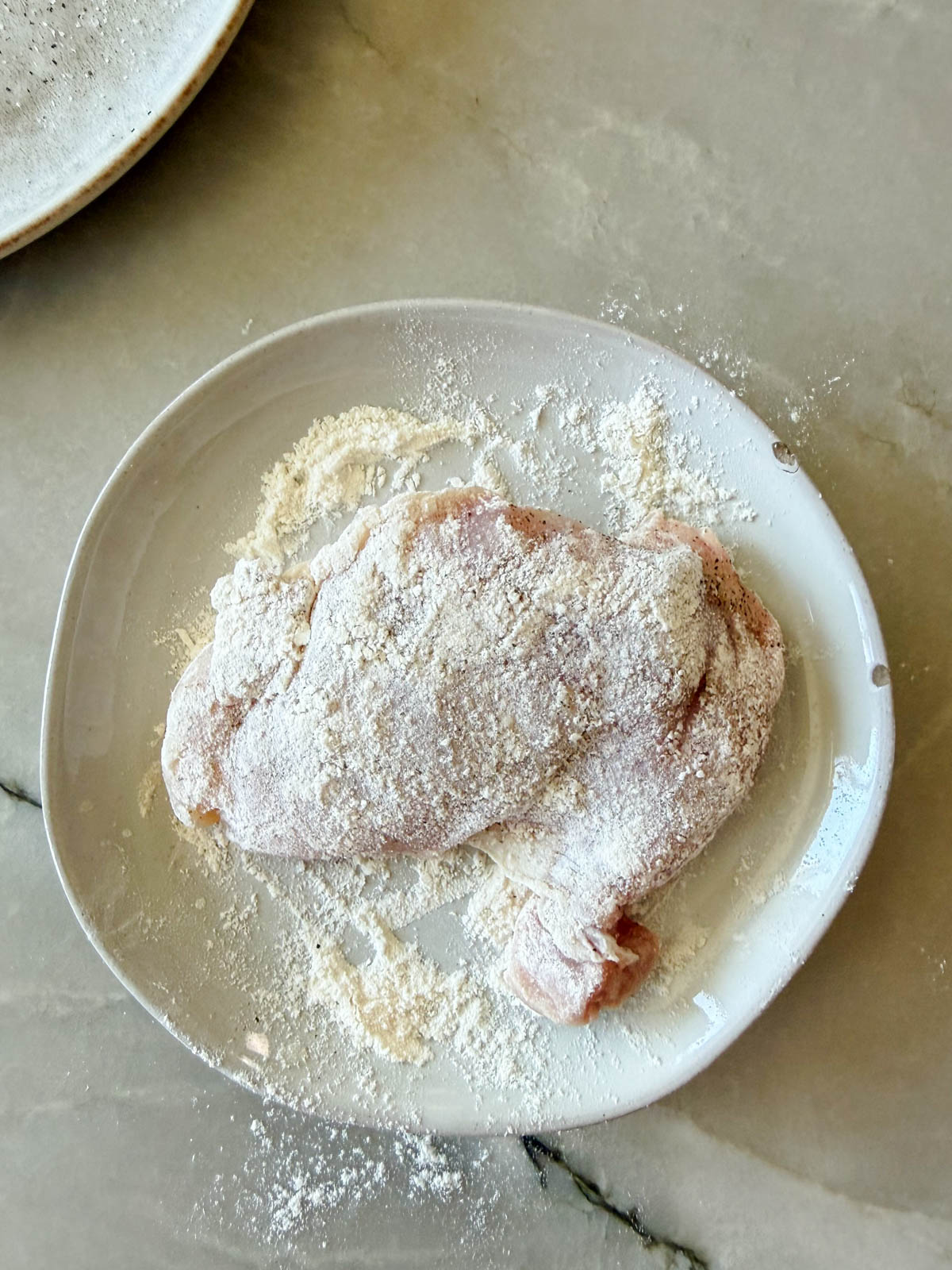
- Step 1: Pat the chicken thighs dry with paper towels. Season both sides of the chicken evenly with the sea salt and freshly cracked black pepper. Spread the flour on a plate and press each thigh into it, coating both sides lightly and shaking off any excess.
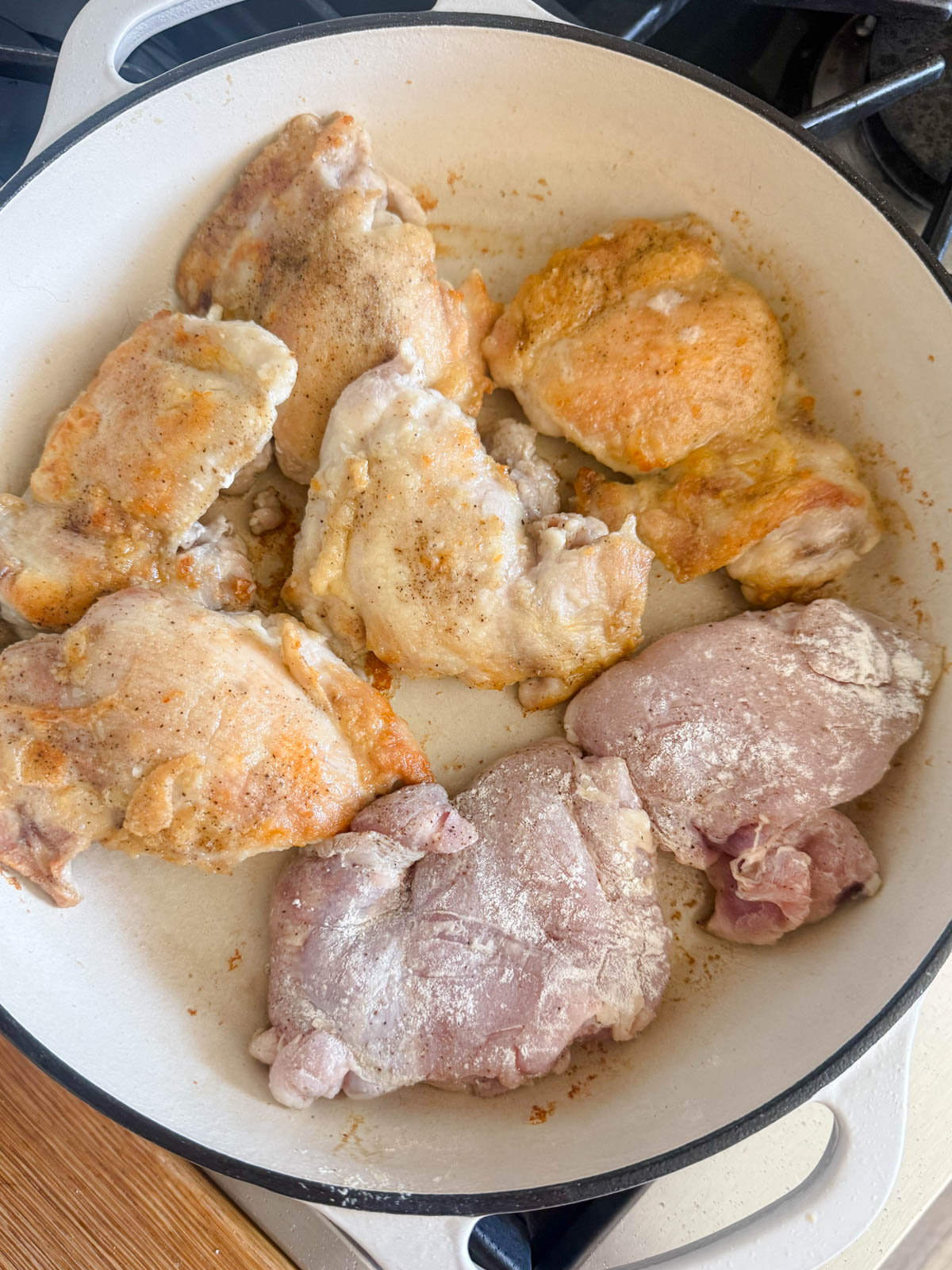
- Step 2: Heat 1 tablespoon of the olive oil in a large (12”), deep (2”) skillet or Dutch oven over medium-high heat. Add the chicken thighs in a single layer. Do not crowd the pan. If needed, work in two batches. Cook without moving them for 3 to 4 minutes until the bottom is deep golden brown, then flip and cook another 2 to 3 minutes. Transfer to a plate and set aside.
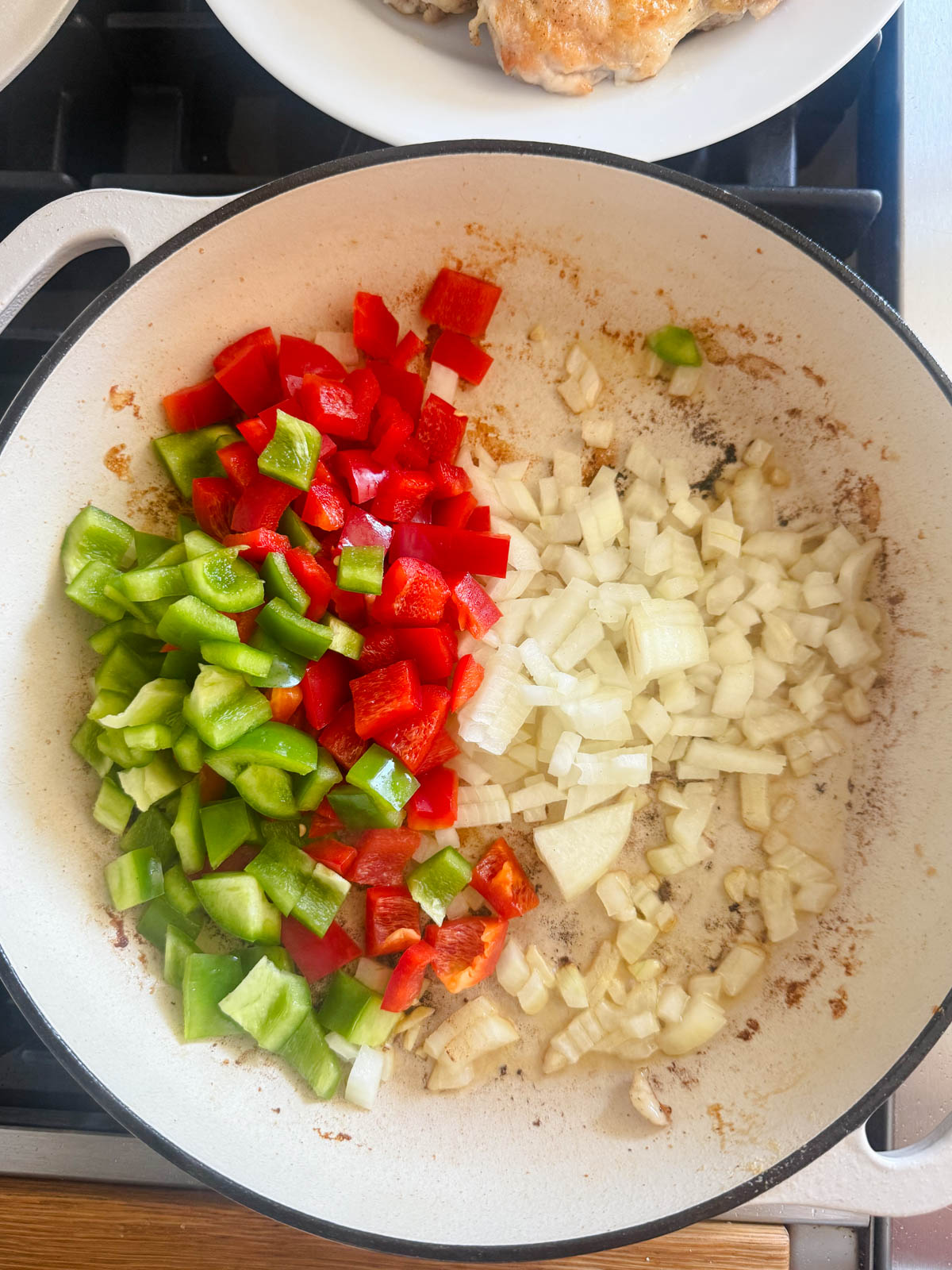
- Step 3: Reduce the heat to medium and add the remaining 1 tablespoon of olive oil to the same pan. Add the diced onion and both bell peppers. Cook, stirring occasionally, until the onion softens and turns translucent, about 4 to 5 minutes.
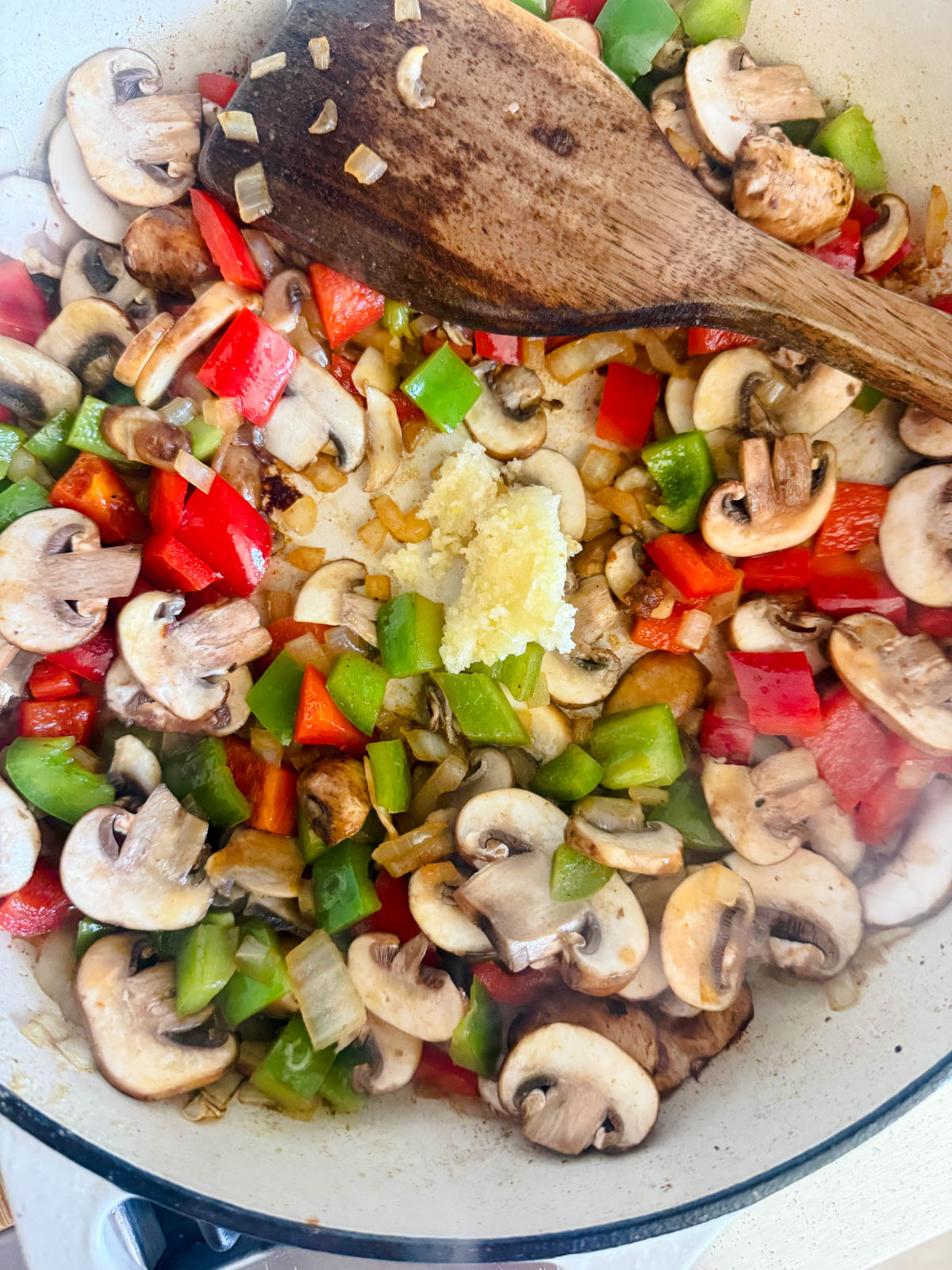
- Step 4: Add the sliced mushrooms and cook, stirring, until the mushrooms have released their liquid and are starting to turn golden, about 3 to 4 minutes more. Add the minced garlic and stir for 30 seconds until fragrant.
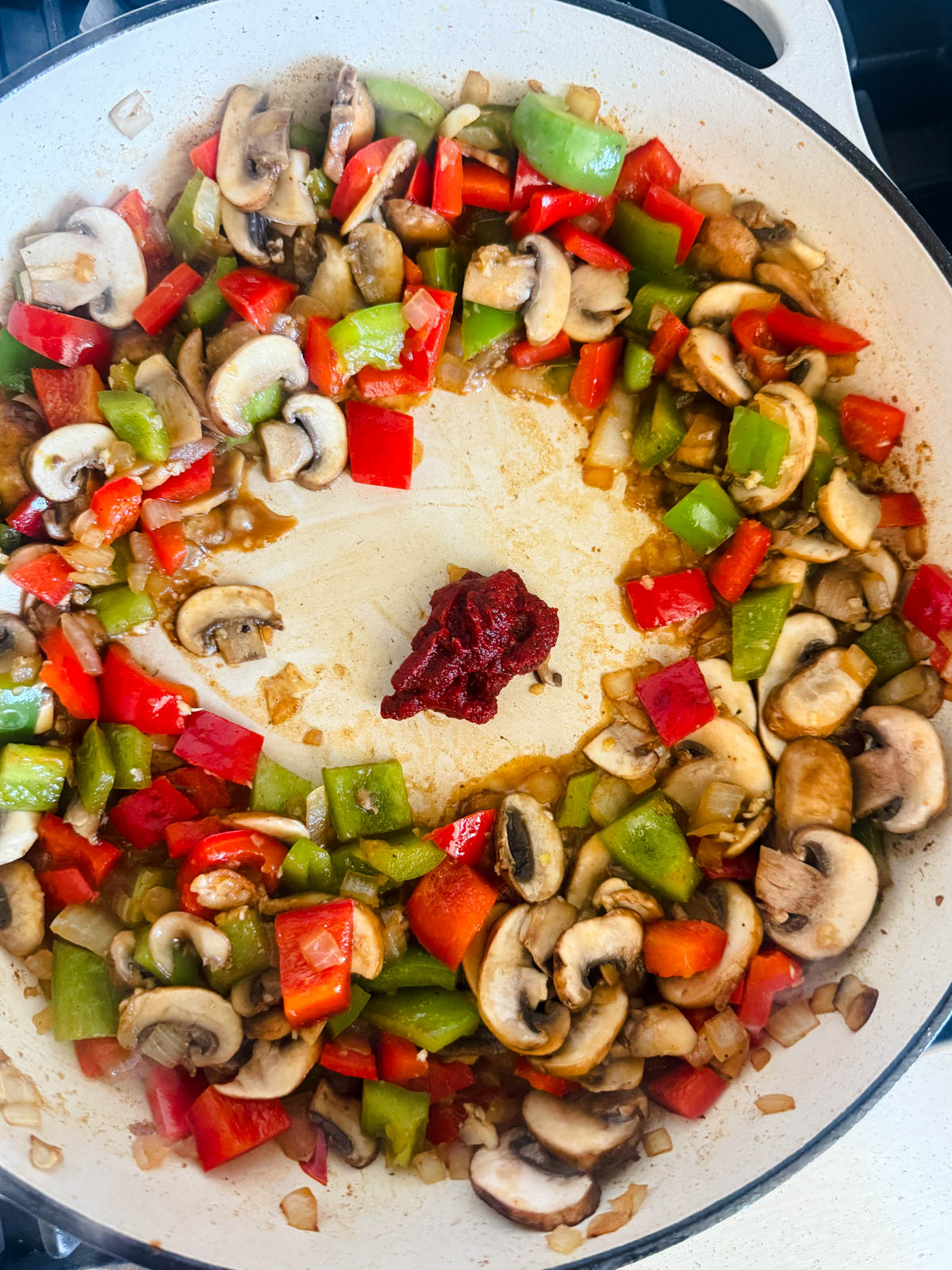
- Step 5: Push the vegetables to the edges of the pan and spoon the tomato paste into the center. Let it cook, undisturbed, for about 1 minute until it darkens slightly from bright red to a rusty brick color. Stir it into the vegetables.
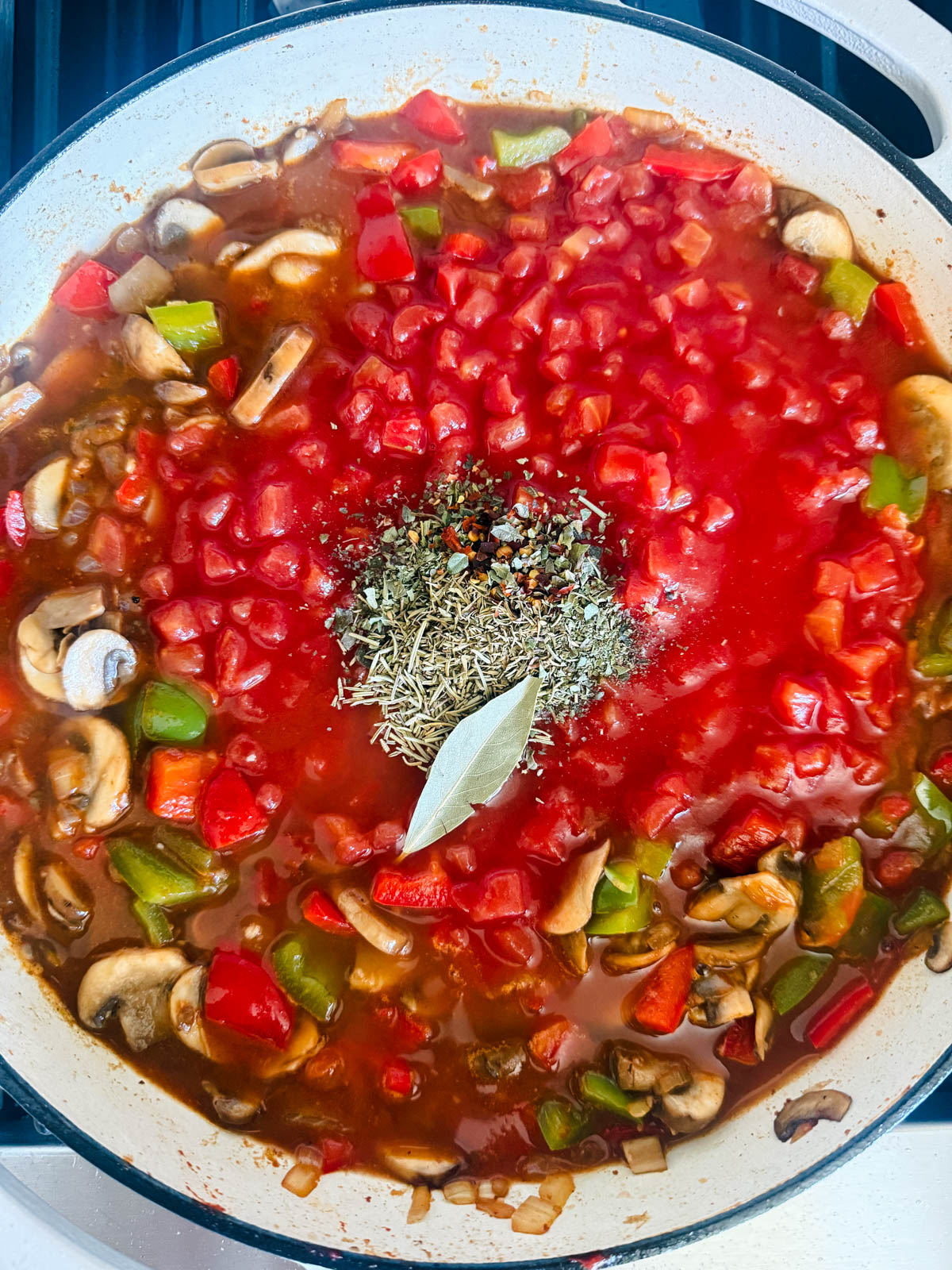
- Step 6: Pour in the red wine. Use a wooden spoon to scrape up any browned bits stuck to the bottom of the pan. Let the wine simmer and reduce by about half, which takes 2 to 3 minutes. Then add the diced tomatoes with all their juices, the chicken broth, dried oregano, dried rosemary, dried thyme, bay leaf, and red pepper flakes if using. Stir to combine.
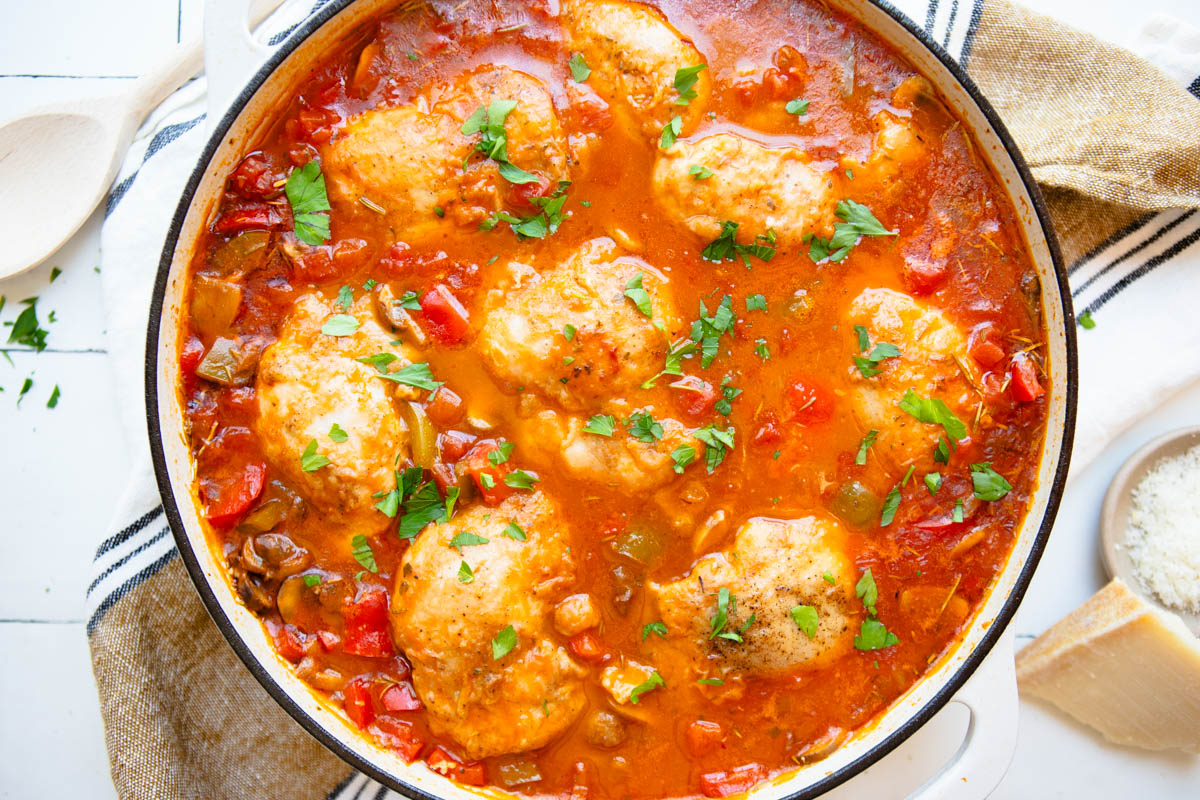
Step 7: Nestle the seared chicken thighs into the sauce in a single layer. Any juices that collected on the plate go in too. Bring the sauce to a gentle boil, then reduce the heat to low, cover with a lid, and simmer for 25 to 30 minutes until the chicken is fully cooked through and very tender. The chicken is done when it reaches an internal temperature of 165°F.
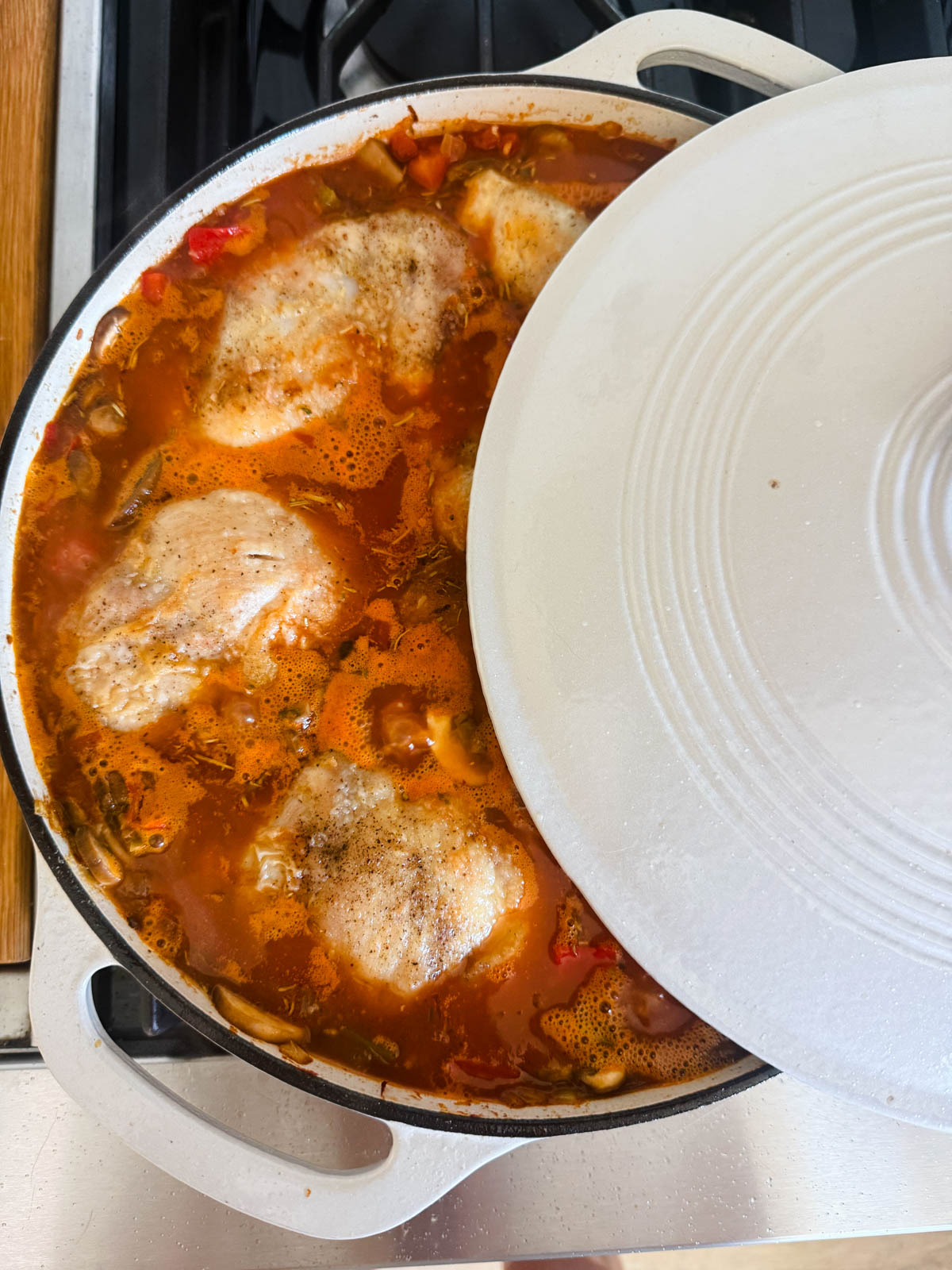
Step 8: Remove the lid and discard the bay leaf. If the sauce looks thinner than you would like, increase the heat to medium and let it simmer uncovered for 5 to 8 minutes, stirring occasionally, until it reaches your preferred consistency.
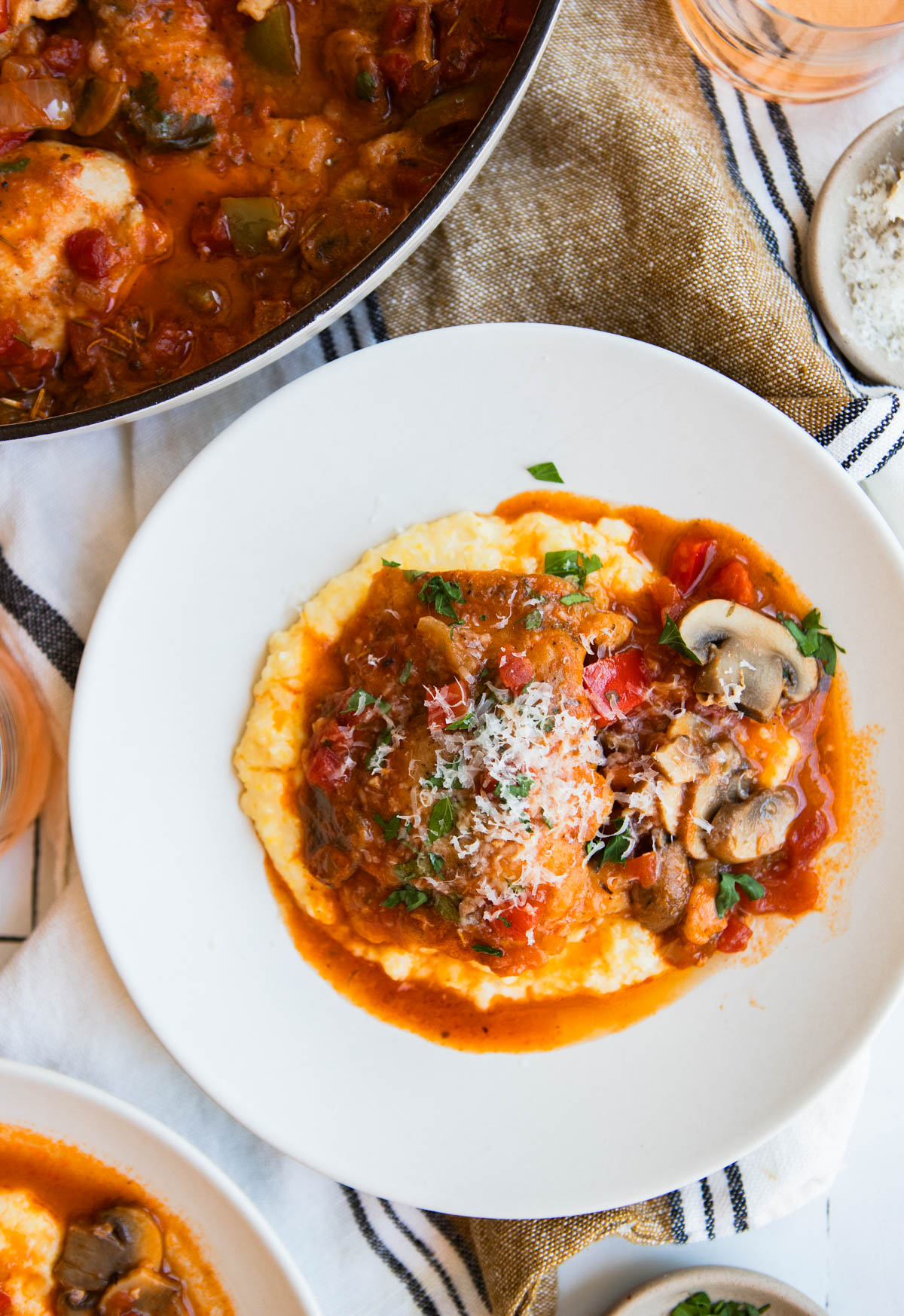
Taste the sauce and adjust the salt and pepper as needed. Scatter the fresh parsley over the top and serve hot over whole wheat pasta, brown rice, or polenta.
Important Recipe Notes & tips
While this dish isn’t complicated, to maximize flavor and texture, a few tips are helpful. These important notes will help avoid some of the common problems people can run into with this recipe, mainly the sauce falling flat and lacking in depth, or the chicken drying out.
Avoid your Sauce Falling Flat
Freshly cracked black pepper matters in this recipe because whole peppercorns contain volatile aromatic oils that begin to fade the moment the pepper is ground. Pre-ground pepper loses most of those aromatic compounds within a few weeks of opening, leaving mostly heat but little flavor.
Cracking it fresh just before it goes into the pan delivers both the subtle fruity aroma and the gentle heat that make the sauce more complex.
Make sure to let the tomato paste cook, undisturbed, for about 1 minute until it darkens slightly from bright red to a rusty brick color before stirring it into the vegetables. This step blooms the tomato paste and concentrates its deep, savory flavor throughout the sauce.
Chicken cacciatore sauce almost always tastes richer and more developed on the second day. The fat-soluble flavor compounds in the herbs and garlic continue working their way through the sauce as it rests, which is the reason so many Italian cooks make this dish a day ahead for company. If you have time, refrigerate the finished cacciatore overnight and gently reheat it before serving.
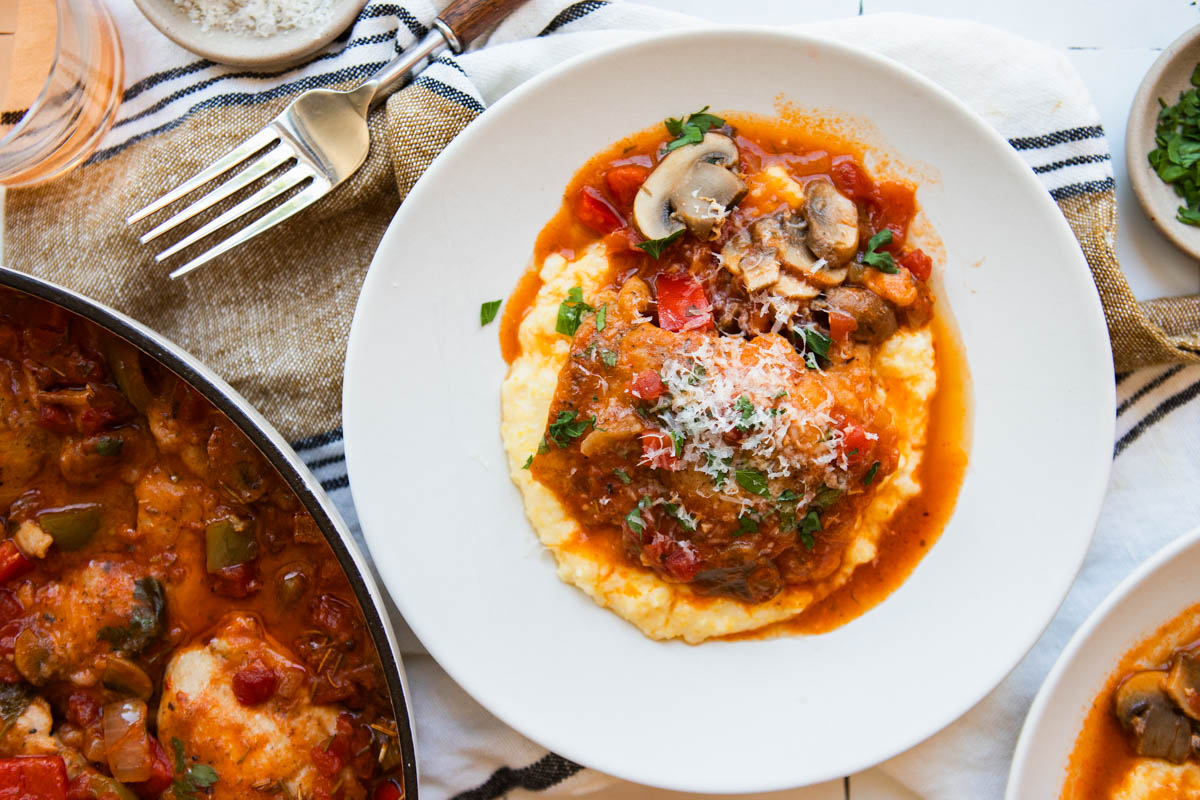
What to do if your sauce is too thin
If your chicken cacciatore sauce turns out thinner than you would like, do not add more flour or cornstarch directly to the simmering pot because it will clump.
Instead, remove the chicken to a plate, turn the heat to medium, and let the sauce boil uncovered for 5 to 10 minutes while stirring occasionally. The sauce will reduce and thicken naturally as the water evaporates. Return the chicken to warm through before serving.

Recipe Substitutions for Chicken Cacciatore
- Red wine substitution: To make chicken cacciatore without wine, replace the ½ cup of red wine with an equal amount of additional low-sodium chicken broth plus 1 tablespoon of red wine vinegar. The broth provides the liquid volume and the vinegar provides the acidity that wine normally contributes. The finished sauce will be slightly milder but still full of flavor.
- Want to sub in chicken breasts? Boneless, skinless chicken thighs are the right cut for chicken cacciatore braising. Unlike chicken breasts, thighs have enough fat and connective tissue to stay moist and become tender during the longer simmer time. Chicken breasts can work but they dry out quickly in a braise, so if substituting, reduce the covered simmer time to 15 minutes and check the internal temperature early.
- When using bone-in and skin-on chicken thighs: bone-in, skin-on thighs may be used. Increase covered simmer time to 35 to 40 minutes and remove the skin before serving to reduce saturated fat.
- Red versus white wine: The difference between red wine and white wine in chicken cacciatore comes down to depth versus brightness. Red wine adds richer, earthier notes that work especially well with the mushrooms and dark meat. White wine adds a lighter, slightly floral quality. Both are traditional depending on the region of Italy the recipe comes from. For this version, a dry red wine is the best choice because it complements the mushrooms without overpowering the chicken.
- Want to add olives or capers? Many chicken cacciatore recipes call for capers or olives, while ours obviously doesn’t. Super easy to stir in ⅓ cup of pitted kalamata olives and 2 tablespoons of drained capers along with the tomatoes for a briny, Southern Italian-style version with more depth and complexity.

Serving Suggestions
Chicken cacciatore is a hearty protein rich stew that is great as is if opting for a low carb meal. If you wish for it to have more sticking power though, keeping you fuller for a bit longer, it pairs wonderfully with a few starchy carbs.
- The classic Italian food lover would of course want to pair this Italian stew with some type of pasta. A short tube or curly pasta like penne or cavatappi would be a great complement.
- Topping it over a bed of brown rice may feel a little unusual but we promise it works so well together. The chewy and hearty grain soaks up the sauce and is mild enough not to overpower it.
- My personal favorite is creamy polenta. No need to make it from scratch either; just open up a polenta tube found at any grocery store, and warm it in a sauce pan with a generous amount of milk and dollop of butter. So delicious!
- Good old fashioned crusty bread is cheap, rustic and easy!
- Add beans! Stir in one drained and rinsed can of cannellini beans during the last 10 minutes of simmering to boost the fiber and protein content and make the dish even more filling without additional calories.

Freezing, Thawing and Reheating Instructions
Storage: Transfer cooled chicken cacciatore to an airtight container and refrigerate for up to 4 days. The sauce will continue to develop flavor as it sits, making leftovers especially good.
Reheat/Warming: Reheat individual portions in a covered skillet over medium-low heat, adding a splash of chicken broth or water if the sauce has thickened during storage. Stir gently to avoid breaking up the :chicken. Heat until the sauce is bubbling and the chicken reaches an internal temperature of 165°F, about 8 to 10 minutes. The microwave also works. Cover loosely and heat in 90-second intervals, stirring between each, until heated through.
Freeze/Thaw: Chicken cacciatore freezes very well. Let it cool completely, then transfer to a freezer-safe airtight container or zip-top bag, removing as much air as possible. Freeze for up to 3 months. Thaw overnight in the refrigerator. Reheat as directed above. The sauce may look slightly separated after freezing but will come back together once stirred over gentle heat.
Making Slow Crock Pot Chicken Cacciatore
To make slow cooker chicken cacciatore, sear the chicken and sauté the vegetables as directed, then transfer everything to a slow cooker with all remaining ingredients. Cook on LOW for 6 to 7 hours or HIGH for 3 to 4 hours. Remove the lid for the last 30 minutes on HIGH to help the sauce thicken.
More Easy One Pot Meals
- Beef Sirloin Tips with Garlicky Butter Potatoes
- Apple Chicken Sausage with Orzo and Baby Broccoli
- Turkey Meatballs with Brown Rice and Lemon Zest
- Steak Picado with (canned) Potatoes
- Mediterranean Chicken and Rice with capers and sundried tomatoes

Easy 1 Hour Chicken Cacciatore Recipe
Equipment
Ingredients
- 2 lbs Chicken thighs boneless, skinless (6-8)
- ½ teaspoon Sea salt plus more to taste
- ¼ teaspoon Fresh cracked pepper
- 3 tablespoon All purpose flour
- 2 tablespoon Olive oil divided
- 1 medium Yellow onion diced
- 1 medium Red bell pepper cubed into 1" pieces
- 1 medium Green bell pepper cubed into 1" pieces
- 8 ounces Cremini mushrooms thinly sliced
- 5 Garlic cloves minced
- 2 tablespoon Tomato paste
- ½ cup Red wine dry like Pinot Noir or Cabernet
- 28 ounces Canned diced tomatoes not drained
- ½ cup Low sodium chicken broth
- 1 teaspoon Dried oregano
- ½ teaspoon Dried rosemary
- ½ teaspoon Dried thyme
- 1 Bay leaf
- ¼ teaspoon Red pepper flakes
- 2 tablespoon Flat leaf parsley chopped, for garnish
Instructions
- Pat the chicken thighs dry with paper towels. Season both sides of the chicken evenly with the ½ teaspoon of fine sea salt and ¼ teaspoon of freshly cracked black pepper. Spread the flour on a plate and press each thigh into it, coating both sides lightly and shaking off any excess.2 lbs Chicken thighs, ½ tsp Sea salt, ¼ tsp Fresh cracked pepper, 3 tbsp All purpose flour
- Heat 1 tablespoon of the olive oil in a large (12”), deep (2”) skillet or Dutch oven over medium-high heat. Add the chicken thighs in a single layer. Do not crowd the pan. If needed, work in two batches, using only half the olive oil per batch. Cook without moving them for 3 to 4 minutes until the bottom is deep golden brown, then flip and cook another 2 to 3 minutes on the second side. Transfer to a plate and set aside.2 tbsp Olive oil
- Reduce the heat to medium and add the remaining 1 tablespoon of olive oil to the same pan. Add the diced onion and both bell peppers. Cook, stirring occasionally, until the onion softens and turns translucent, about 4 to 5 minutes. Add the sliced mushrooms and cook, stirring, until the mushrooms have released their liquid and are starting to turn golden, about 3 to 4 minutes more. Add the minced garlic and stir for 30 seconds until fragrant.1 medium Yellow onion , 1 medium Red bell pepper, 1 medium Green bell pepper, 8 ounces Cremini mushrooms, 5 Garlic cloves
- Push the vegetables to the edges of the pan and spoon the tomato paste into the center. Let it cook, undisturbed, for about 1 minute until it darkens slightly from bright red to a rusty brick color, then stir it into the vegetables.2 tbsp Tomato paste
- Pour in the red wine. Use a wooden spoon to scrape up any browned bits stuck to the bottom of the pan. Let the wine simmer and reduce by about half, which takes 2 to 3 minutes.½ cup Red wine
- Add the diced tomatoes with all their juices, the chicken broth, dried oregano, dried rosemary, dried thyme, bay leaf, and red pepper flakes if using. Stir to combine. Nestle the seared chicken thighs as well as any collected juices into the sauce in a single layer. Bring the sauce to a gentle boil, then reduce the heat to low, cover with a lid, and simmer for 25 to 30 minutes until the chicken is fully cooked through and very tender. The chicken is done when it reaches an internal temperature of 165°F.28 ounces Canned diced tomatoes, ½ cup Low sodium chicken broth, 1 tsp Dried oregano, ½ tsp Dried rosemary, ½ tsp Dried thyme, 1 Bay leaf, ¼ tsp Red pepper flakes
- Remove the lid and discard the bay leaf. If the sauce looks thinner than you would like, increase the heat to medium and let it simmer uncovered for 5 to 8 minutes, stirring occasionally, until it reaches your preferred consistency. Taste the sauce and adjust with additional salt and pepper, and then scatter the fresh parsley over the chicken cacciatore. Serve over bowls of creamy polenta, brown rice or pasta.2 tbsp Flat leaf parsley

Leave a Comment